
Not everyone comes to therapy wanting the same thing. And not everyone should.
Some people want a place to exhale. Somewhere they can talk about their week, process how they’re feeling, and have someone really listen, not to fix anything, just to hear them. (When people offer solutions or advice or try to make us feel better by “fixing” our feelings, sometimes that feels dismissive…or like they can’t handle our feelings or are telling us we should try to make them go away. That often doesn’t feel helpful.) There’s no agenda, no homework, no pressure to change. Just the experience of having someone’s full, undivided, nonjudgmental attention. And for some people, that alone is healing. A non-directive, empathy-based therapist creates this kind of setting. Perhaps those of us who had practical minded parents who related to our emotions with solutions or overreactions long the most for this place to just be heard and to be.
Others would find that model frustrating. They feel they could call a friend for a listening ear or just to have someone say back to them what they’ve heard them say. What they want is a therapist who will teach them something like concrete skills, specific strategies, a clear path from point A to point B. These clients are motivated, practical, solution-oriented. They want to track their progress, do the work between sessions, and see results, not explore their childhood or vent about their week. They want to change their behavior, and they want someone to show them exactly how. Therapists with CBT training or a clear system for getting specific results tend to be most helpful for this group. These are often clients who like structure and prefer to be practical about their feelings, asking “what should I do about them?” instead of wishing to explore them or to be heard. (Sometimes this can come from an avoidant attachment style, and sometimes it’s just a personality preference).
Then there’s a third group. They know something is wrong — anxiety, depression, a pattern they can’t break — and they want to feel better. But they don’t come in with a specific technique in mind or a particular outcome mapped out. They just know they want something to shift. They like self-growth and are open to trying different things as long as it might help. These are often the clients who surprise themselves in therapy. They come in for one thing and discover something else entirely. The relationship with the therapist starts to feel different from other relationships in their life. There’s room to say things that are usually too awkward to say. Things that felt shameful start to feel okay. The anxiety they came in with begins to go away.
This third experience is closest to the kind of therapy I think I practice (and prefer), my own version of a psychoanalytic type of therapy I suppose…where surprises from the unconscious come up, the therapy relationship takes center stage, and speaking freely doesn’t just reveal things about ourselves but also is its own type of exposure therapy for facing our feared thoughts, feelings, and the things we find hard to say out loud. And where we get a different relational experience than the ones that have led to the challenges we live with today.
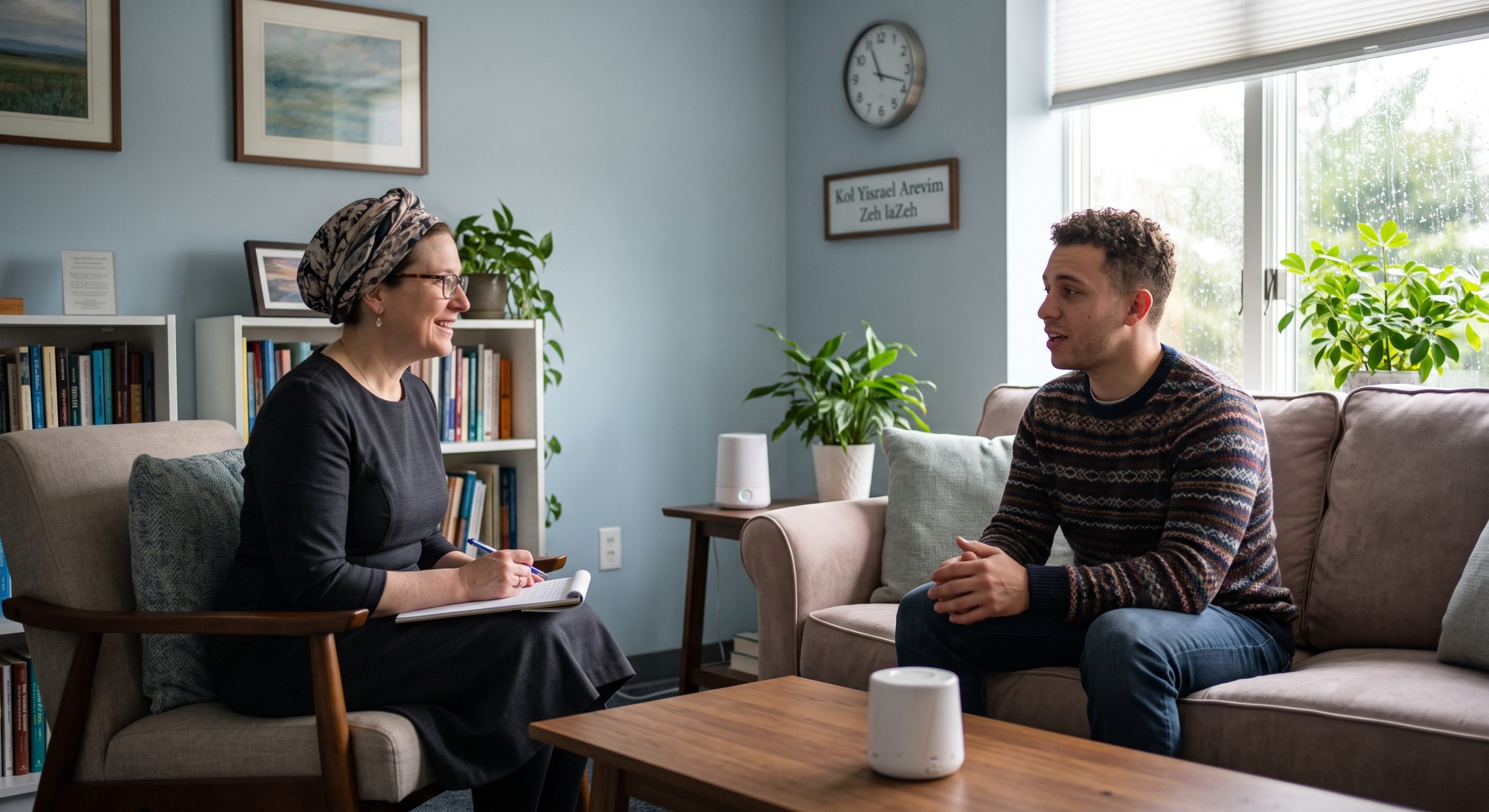
I think of the therapy room as a transitional space — separate from the rest of one’s life, with its own rules; rules that create a structured and containing (and predictable) experience, but that are also often meant to be broken at least every once in a while! A place where you can say things and feel things that other people in your life wouldn’t easily tolerate, and where you can have feelings you usually push aside, face fears you usually avoid, and make connections you couldn’t quite make on your own. Where the relationship itself becomes part of the work.
Because insight alone isn’t usually enough. Knowing why you do something, like where it comes from, or who you learned it from, is only a first step. But insight has to resonate, has to click for us somehow, to be transformational. It has to be paired with vulnerability, with facing the thing we’re coming to understand with all of its attendant emotions and sensations, rather than thinking about it from a safe distance. That’s when patterns that have been conditioned for years actually start to change.
A lot of people come into therapy wondering, on some level, whether the therapist actually cares. They think we disconnect the moment the session ends. Clients ask if I’m just doing a job, or just want to get paid. And I guess in a sense it’s a fair question, because there is something artificial about the setup- two people in a room, one of them paid to be there. But underneath that setup, we’re really just two humans struggling through something together, trying to get something helpful to happen. Yes therapists care, at least the ones I know. And the best therapy happens when both people are willing to be real.
Whatever kind of therapy you’re looking for — there’s something out there that can help. The most important thing is giving it some real thought. What has worked before, even a little? What hasn’t? And what do you actually need right now…
Leave A Comment
You must be logged in to post a comment.