
Esti had stepped into my life, and I into hers.
We were circling something in our sessions, something neither of us could quite name. It felt like an elephant in the room.
Esti seemed to want to get inside me. I could feel it, her worry, when I had thoughts or parts of me she couldn’t know or see.
I had tried explaining that we can never fully enter another person’s mind or self. But Esti didn’t want to believe that her need for that was only a fantasy.
“I need to know you as a person,” Esti said, when I told her that talking about my life might not be helpful to her therapy.
“Tell me more about that,” I said instead. “Tell me about needing to know me as a person.”
Esti looked down. Silence loomed in the space between us.
She didn’t want to say more.
“Can you tell me more about it, Esti?” I asked, my voice quieter now.
She still resisted. I wondered what was hard. In my body, I felt a pull, a tension—like we were caught in a struggle between closeness and distance. It struck me that this felt like a power struggle, a tug-of-war between us.
“Esti,” I asked gently, “do you think if I told you more about myself, it would make things feel more even? That it would give you more power in our relationship?”
She nodded, eyes still looking down.
Part of me wanted to answer her questions, wanted to hand over pieces of myself to calm Esti’s longing. But another part of me wanted to work with the meaning behind her need.
“I think,” I said carefully, “it feels like if you could know everything in my mind, and if you could know me totally and completely as a person, then I wouldn’t be able to think anything bad about you, or decide to leave you. Is that right?”
Esti nodded again, almost imperceptibly. Then she looked up briefly, her eyes catching mine for just a moment.
“I’m afraid,” she said softly, “that you’ll think you’re not helping me. And you’ll want to give up. I know sometimes it seems like I’m not getting better. But I still want to talk to you.”
“Well, we are still talking, Esti,” I said. “But it sounds hard to trust that will last. That I won’t suddenly change my mind about our relationship and about trying to help you.”
“Yes,” she whispered. Esti paused and took a breath. “When I was growing up, my mother changed her mind all the time. She’d say yes to something, then take it back. Or say we could do something and then at the last minute, decide it wasn’t really going to work out. Those moments were devastating for me.”
As she spoke, something flickered through me, an image of a small girl clutching at something just beyond her reach. I stayed with the image silently, letting it float around in my mind. I felt a sudden wave of compassion come over me.
And then I also realized, that in our relationship, I was this little girl too. Reaching.
Esti would lean forward toward sharing something, and then pull back. She would tease me with fragments, dangling them in front of me as if luring me towards a moment of shared intimacy, only to then pull away.
I would not say any of this to her though. Because it would hurt her to think she was doing to me what was done to her. She’d find out later in therapy that we all do what was done to us, and that it’s ok, but now wasn’t that time.
Esti came in the next session a little more open. I never knew which version of her I was going to get—that was part of the tease.
Today she told me her husband had said he didn’t like how she sometimes put her work above her kids. Esti felt accused, pierced by his words.
“Tell me more about that, Esti,” I said.
She looked at me, then away. “I feel torn,” she said finally. “I want to be there for my kids, but I also like my work. My work is… validating. It gives me something I can master and control. With my kids…” She trailed off, shaking her head.
“You don’t feel that same control with them?” I asked.
“No,” she said quickly. “I can be as good a parent as possible, but it won’t give me control. Things at home feel more demanding than at work. I never know what the kids will need from me or do.”
“That sounds hard,” I said softly. “Maybe it reminds you of your mother’s unpredictability?” I offered, gently.
Esti nodded and I waited.
“I wish I could have control over you,” she finally said.
The words felt alive in the room. I knew she was right.
“I wish I didn’t have to wait between sessions,” she went on, her voice quickening. “I wish I could know for sure that you won’t…that you’ll answer any question I ask. That you’ll always be there. That you’ll never hurt me.”
Her words pressed close to my heart and body, intimate in their nakedness.
“Yeah,” I said quietly, understanding in my tone. “It sounds like you’re longing for a feeling of safety. And that it feels almost unbearable when things feel uncertain.”
Esti nodded, and teared up just a drop.
“And work,” I continued, “gives you that certainty. The numbers don’t change their mind on you. Everything adds up. You can get it just right. You can control it.”
“Yes,” Esti said, sighing.
“With your kids,” I reiterated, “and here with me, it’s harder. Because there’s risk. There’s ambivalence. And it feels messy, unpredictable. Not in your control.”
“That’s right,” Esti said softly.
As she spoke, an image floated through my mind of a young girl playing with numbers on a calculator, a sad look in her eyes.
I said “It’s like you turned to things like numbers to dull the pain of longing for something you couldn’t or can’t have in your relationships…control and order.”
Esti nodded.
“And yet numbers don’t nourish you emotionally, and neither does control.” I explained. “Part of what’s helpful about relationships is that we get something different, other, than what we offer ourselves. Like the difference between an infant being fed milk versus sucking his thumb.”
I looked at Esti. “How about if you try trusting me to give you what you need even if you can’t have control over it? Then you’ll know it came from me and you can take inside yourself something given to you by another person. And perhaps you can learn to enjoy imagining things about me without having to know them for sure.”
Esti smiled a thin smile.
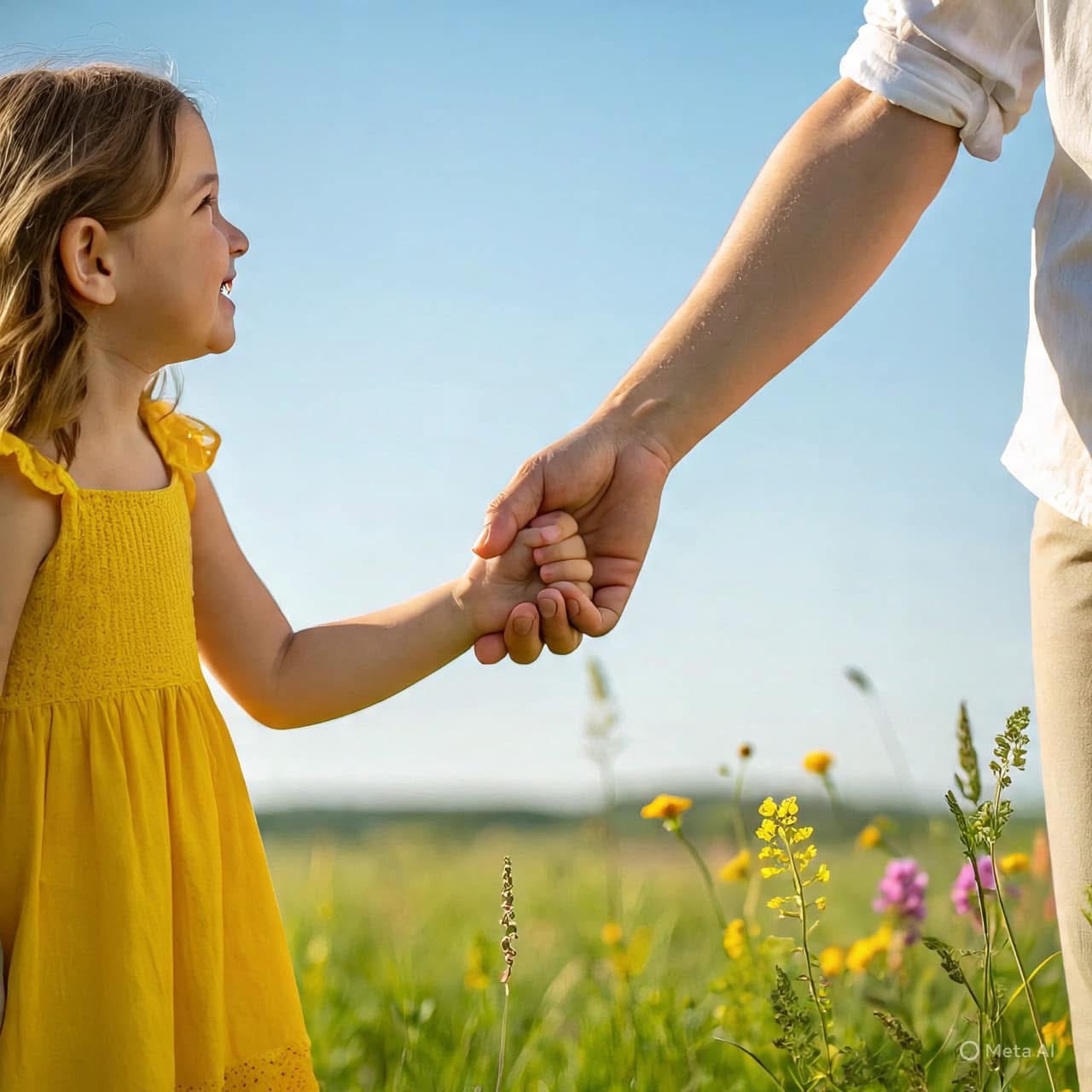
And then, in my imagination, I saw a small girl reaching out, and I took my hand in hers, in my mind. I hoped Esti could feel this somewhere somehow in her heart.
She looked up at me and our eyes met in shared understanding. We smiled at each other as we met each other other’s gaze.
And I never did tell Esti about my life, but our minds had managed to meet in a different way. And that was good enough.
Leave A Comment
You must be logged in to post a comment.