About mirel

Counselor and Psychotherapist in New Jersey for OCD, social anxiety, anxiety. College professor, author
23 08, 2024

Video on Coping with Shame: When Others Deny Our Reality

2025-07-22T04:57:12+00:00

Shame is a powerful emotion that can shape our self-perception and interactions with others. Often, people avoid facing their own shame by denying the realities of those around them. This denial serves as a defense mechanism, helping them maintain a comfortable self-image. However, it can be incredibly damaging to those whose experiences are […]


Video on Coping with Shame: When Others Deny Our Reality2025-07-22T04:57:12+00:00
11 08, 2024

Some Thoughts on Guilt and Shame

2025-07-22T04:57:12+00:00

In truth, all emotions we experience are ultimately signals—responses to stimuli or conditioning we’ve internalized. By questioning whether these emotions truly belong to us (or if they’re introjected, i.e. alien aspects from others that don’t align with our true selves); assessing whether they’re helpful and appropriate to the context we’re experiencing them in; and recognizing them as acceptable parts of ourselves, we increase our agency and autonomy. Moving away from reflexive, automatic beliefs and reactions to our emotions towards more reflective and constructive ways of relating to them can help us engage with them in ways that align with our true selves.

Some Thoughts on Guilt and Shame2025-07-22T04:57:12+00:00
31 07, 2024

How Conditioned Beliefs Fuel Anxiety and Rumination: Insights from Metacognitive Therapy

2025-07-22T04:57:12+00:00

Anxiety often feels like an inescapable part of life, driven by persistent worry and rumination. Metacognitive therapy (MCT) offers a unique perspective on how our beliefs about our thoughts can maintain and even exacerbate anxiety.

The Role of […]

How Conditioned Beliefs Fuel Anxiety and Rumination: Insights from Metacognitive Therapy2025-07-22T04:57:12+00:00
24 07, 2024

How your attachment style may affect your relationship to therapy or medication

2025-07-22T04:57:12+00:00

Having an avoidant or dismissive attachment style can lead to not wanting to take medication or rely on others or talking about feelings for help. Having a preoccupied or anxious ambivalent attachment style can lead to a person wanting a “pill” that can “fix things” or wanting someone or something to make them […]

How your attachment style may affect your relationship to therapy or medication2025-07-22T04:57:12+00:00
17 07, 2024

Intrusive Thoughts that Make Us Anxious

2025-07-22T04:57:13+00:00

Understanding and Managing Intrusive Thoughts

We’ve all experienced those random thoughts that pop into our heads seemingly out of nowhere. For most of us, these fleeting thoughts are barely noticeable, and we move on without giving them a second thought. […]

Intrusive Thoughts that Make Us Anxious2025-07-22T04:57:13+00:00
24 06, 2024

Painful Self-Consciousness

2025-07-22T04:57:13+00:00

We develop self-consciousness when we start to see ourselves objectively, stepping out of our own experience to imagine how others perceive us. This ability to see ourselves from an outsider’s perspective is an important developmental step. Those who lack awareness of how others […]

Painful Self-Consciousness2025-07-22T04:57:13+00:00
31 05, 2024

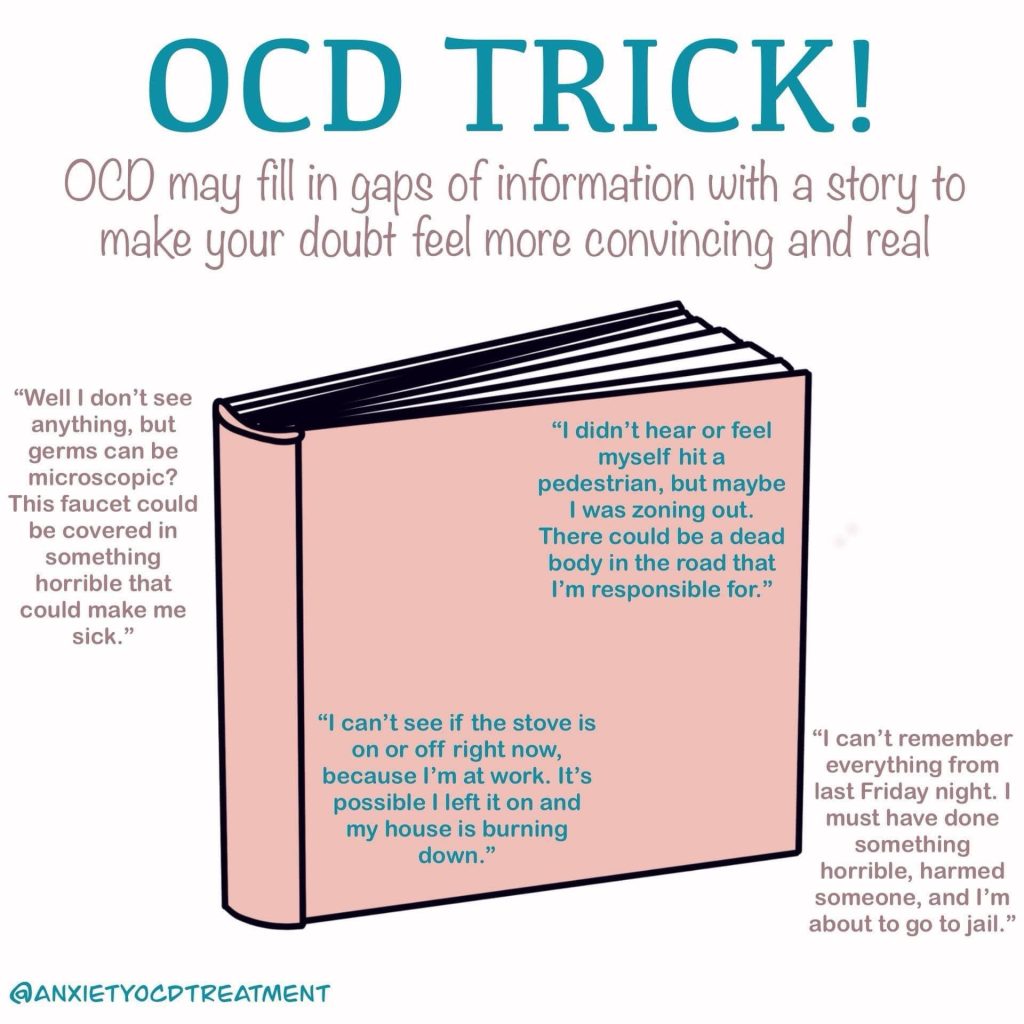
Imagined scenarios in OCD

2025-07-22T04:57:13+00:00

Most of us think of OCD in terms of hand washers or people who engage in specific compulsive behaviors.

However, many mental compulsions are also a part of OCD.

Mental compulsions or safety behaviors (things […]

Imagined scenarios in OCD2025-07-22T04:57:13+00:00
1 05, 2024

Labeling OCD Thoughts for What They Are

2025-07-22T04:57:13+00:00
Thank you to my colleague Amanda Petrik-Gardner for permission to use her infographic!

Identifying when OCD is pulling you in:

Many people find it helpful to label their OCD thoughts as external to them, such as calling the thoughts “the […]

Labeling OCD Thoughts for What They Are2025-07-22T04:57:13+00:00
2 04, 2024

Should the need for reassurance be outgrown?

2025-07-22T04:57:13+00:00

When it comes to feelings of vulnerability, fear, or distress, reassurance is one of the earliest forms of soothing our parents and caregivers provide.

From as early as infancy, our parents say comforting words to us when we cry, as […]

Should the need for reassurance be outgrown?2025-07-22T04:57:13+00:00
Go to Top